 Store
Store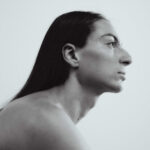
Hḗrā was born in Lisbon, Portugal on 19 September 1995. They grew up in Portugal and trained in performing arts at the Escola Profissional de Teatro de Cascais. In 2018, shortly after being diagnosed HIV+, they moved to London. These experiences — migration, diagnosis, transition — continue to shape both their life and practice, grounding their work in lived knowledge rather than abstraction.
Hḗrā is a trans-femme, HIV+ artist and activist working across performance, installation, land art, photography, poetry, and publishing. Their practice examines how bodies are regulated by medical, architectural, ecological, and political systems, and how those same bodies resist, adapt, and re-author themselves. Working through ritual, embodied methodologies, and site-responsive processes, they treat personal narrative as a strategy for exposing structural power rather than as confession.
Recent works including Ugly Duck – Follow Y/our River (2025), Architectures of Failure (2025), The Ruins of HER(A) (2025), and I’m Made of This Earth (2025), published by F WORD MAGAZINE, position the trans body in relation to river systems, institutional architectures, ancient ruins, and soil. Across these projects, land and built space function as collaborators, archives, and witnesses.
Alongside their artistic practice, Hḗrā facilitates workshops at the intersection of identity, wellbeing, and social change, developing creative and embodied approaches primarily with people living with HIV. They have delivered workshops with organisations including Whitworth and Positive East. Hḗrā maintains ongoing collaborations with Paula Roush and Delaine Le Bas, engaging in shared research, performance, and socially engaged projects.


My practice engages questions of identity, trauma, and marginalisation through a transdisciplinary approach spanning visual art, performance, publishing, and socially engaged work. As a trans-femme artist, I draw on lived experience to examine how systemic structures — medical, political, architectural, and ecological — regulate and mark the body. Personal experience functions not as confession, but as a method for tracing how power is inscribed, administered, and resisted.
Working with photo-narrative, performance, sound, and installation, I re-stage trauma through processes of ritual, role-play, and embodied methodologies such as Photo-Therapy, movement, voice, and spatial intervention. These practices allow for forms of repair, re-authorship, and embodied agency to emerge. Across my work, I challenge fixed ideas of gender, naturalism, and authorship, foregrounding self-representation as both a political strategy and a practice of care.
I’m Made of This Earth (2025) continues my exploration of working directly with natural environments and constructing narrative through materials found within them. This collaborative project — combining land art, performance, photography, and poetry — was published by F WORD MAGAZINE in the special issue LAYERD 2025, dedicated exclusively to non-binary, trans, and queer artists. Photographed by Jessie Silver, the work situates the trans and queer body in direct dialogue with soil, water, and stone.
Here, the body is approached as both ecological and political terrain — vulnerable yet resistant, scarred yet regenerative. The landscape does not frame the work; it participates in it. Earth becomes witness and co-author, holding traces of erasure, migration, and survival. Through photo-performance and poetic text, the project insists on kinship between human identity and the biosphere, proposing belonging as reciprocal rather than possessive.
Architectures of Failure (2025), developed for The Flip Side of the Coin and presented at Chemist Gallery, extends this inquiry into the spatial and institutional conditions that shape access, visibility, and belonging. Working across performance and installation, the project examines how bodies are disciplined through architectural design and bureaucratic systems, using the bathroom and the gallery as sites where care and control intersect. A domestic bathroom becomes a threshold space where private acts of self-maintenance are rendered visible yet inaccessible, mirroring the contemporary policing of trans bodies and the slow violence of exclusion embedded in everyday infrastructures. In the gallery, a toilet physically chained to my body materialises the psychological and material constraints of gendered and institutional categorisation. Through durational action, audience participation, and acts of blockage and rupture, the work stages refusal as a method — proposing failure as a generative strategy for reimagining autonomy, care, and collective responsibility. The work unfolded as a two-hour performance and installation.
Ugly Duck – Follow Y/our River (2025) explores gender transition, place-based memory, and the bureaucratic architectures that govern identity. Developed through site-specific research along East London’s River Lea, the work draws parallels between the river’s continual transformation and the embodied liminality of trans becoming. Informed by my HIV+ status, the performance incorporates medical documentation and personal text to address visibility, stigma, and survival within institutional systems of care. Using sewn photographic prints, body scans, archival textiles, found instruments, and field recordings, the work unfolds as a tactile and sonic ritual. Voice, sound, and gesture activate an evolving archive shaped by loss, care, and reclamation, creating a temporary space of queer resistance where transition is held, heard, and remembered. The work was presented as a 50-minute performance and installation at Ugly Duck.
The Ruins of HER(A) (2025) expands this investigation into land, ecology, and post-humanism through direct engagement with natural environments. Developed as a two-hour live land art performance, the work is situated within and in dialogue with the ancient, partially submerged ruins of Simena. Using found wood, thread, and voice, the performance emerges through sustained contact with the landscape, allowing wind, sun, water, and stone to co-author the work. The ruins — fractured, weathered, and slowly returning to the earth — function as both material and metaphor, positioning the trans body as an archive shaped by occupation, regulation, and endurance. Through poetic narration and embodied presence, the work draws parallels between histories of territorial conquest and the inscription of law and normativity onto bodies. Rejecting ideas of purity, permanence, and ownership, the work proposes a post-human understanding of belonging grounded in reciprocity, ecological time, and persistence: what is submerged is not erased.
Each project appears on my website in the order presented above: I’m Made of This Earth (2025), Land Art / Performance / Photography; Chemist Gallery – Architectures of Failure (2025), Performance & Installation, 2 hours; Ugly Duck – Follow Y/our River (2025), Performance & Installation, 50 minutes; and The Ruins of HER(A) (2025), Land Art, 2 hours.