 Store
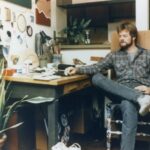
Dyke Rowntree
1953–1988
Dyke Rowntree (1953–1988) was an American painter, designer, and beloved human within the creative communities of Chickasha, Oklahoma, and Dallas, Texas. Although his life was cut short during the AIDS epidemic, Rowntree's surviving paintings and the memories held dearly by those who knew him reveal an artist of remarkable sensitivity, imagination, and expressive freedom.
Born in Chickasha, Oklahoma, Rowntree grew up in a close-knit family and was known from an early age for his creativity, infectious laughter, and mischievous sense of humor. His artistic sensibilities extended to music, writing, collage, drawing, photography, and costume. Friends remember him as magnetic, generous, endlessly curious, and a practical joker whose warmth and exuberance left lasting impressions on everyone he met. As one friend recalled, "Dyke was important to us whether we knew him for a day or for a lifetime. As his sister recalled "Dyke knew love."
In the early 1980s, Rowntree relocated to Dallas, where he became active across the city's gay nightlife and artistic scenes. There he developed his painting practice while working in furniture design and residential interiors, and family members recall that this period marked a profound evolution in his work, as his paintings embraced increasing abstraction and spatial freedom. His boyfriend was hairstylist Ed Firth, whose salon, House of the Turtle, at times served as a gathering place for artists and friends.
Rowntree's life was interrupted by AIDS. He died on August 3, 1988, at the age of thirty-four following a year's illness. Like many artists of his generation, his career and the preservation of his legacy were profoundly shaped by the epidemic.
This biography represents an ongoing effort to reconstruct Rowntree's life and artistic practice through archival research, family collections, and oral histories from those who knew him. As additional materials and firsthand accounts come to light, our understanding of his work and its place within the history of American painting and queer culture continues to grow.


