 Store
Store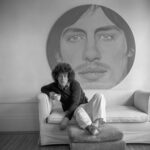
Wayne Douglas Quinn
1941–1987
WayneDouglasQuinn(January 31, 1941 – October 2, 1987) was an American realist painter and portraitist active in San Francisco from the 1960s through the 1980s. Born in Saratoga County, New York, he studied painting at the State University of New York at New Paltz under the Russian-American abstract painter Ilya Bolotowsky. Quinn maintained a lasting friendship with Bolotowsky after completing his studies and later painted two portraits of his former teacher.
In 1963 Quinn moved to San Francisco, where he settled in the Castro and lived for the remainder of his life. During the following decades he became part of the city’s developing artistic and cultural communities as San Francisco emerged as a major center of gay life and creative activity in the United States, alongside New York City, in the years following the cultural shifts of the late 1960s, from San Francisco’s Summer of Love to the Stonewall uprising in New York. Living and working in the neighborhood during its transformative years, Quinn was part of a circle of artists, photographers, musicians, and performers who contributed to the cultural life of the Castro in the 1970s, including photographers Crawford Barton and Hal Fisher, singer Sylvester, and performance groups such as the Cockettes.
In the late 1960s Quinn spent approximately a year living in Amsterdam, where he was exposed to European painting and the traditions of Dutch art, including their distinctive treatment of light.
Quinn exhibited widely in San Francisco and also showed his work in Los Angeles and Seattle. His work was presented at venues including the Upper Market Street Gallery, Hot Flash of America, and Tyson Gallery in San Francisco; McVey-Richter Gallery in Los Angeles; and Penryn Gallery and Foster/White Gallery in Seattle. In addition to gallery exhibitions, he frequently organized informal salon-style shows in his San Francisco apartment, where friends, collectors, patrons, and members of the local art community gathered to view new work.
Known among his peers for his dedication to a daily artistic practice, Quinn was a highly prolific artist who worked across a wide range of media, including oil and acrylic painting, drawing, watercolor, sculpture, murals, experimental films, clothing design and fabrication, and crochet and textile work.
Quinn’s paintings often sought a flat, photographic effect and frequently depicted nude or semi-nude figures rendered in luminous flesh tones within richly colored interior settings. The figures commonly appear in gem-toned San Francisco interiors and are often portrayed in introspective or contemplative states. Art critic Thomas Albright of the San Francisco Chronicle described Quinn’s work as a form of “haunted realism,” noting the quiet, reflective expressions of his subjects. Critics have observed that his paintings often evoke solitude and the emotional atmosphere of urban life.
In 1977 a catalogue of his work, The Art of Wayne Quinn(New Glide Publications, 1977), was published, providing one of the few contemporary documents of his artistic production. Despite an active career, relatively little formal documentation of Quinn’s life and work survives.
Quinn died in San Francisco on October 2, 1987, at the age of forty-six from AIDS-related complications. His work is held in the permanent collections of the Leslie-Lohman Museum ofArt, New York; the Knoxville Museum of Art, Tennessee; the Herbert F. Johnson Museum ofArt, Cornell University, Ithaca, New York; and the Spencer Museum of Art, University of Kansas, Lawrence


